Quotes from The Practice of Everyday life
Michael De Certeau, Luce Giard & Pierre Mayol
-Living: The Neighbourhood-
De Certeau identifies two strands of research into the neighbourhood:
1. The urban sociology of the neighbourhood. It essentially privileges data relative to space and architecture; it takes measurements (surface area, topography, the flux of movements, etc.) and analyses objective material and administrative constraints that enter into the definition of the neighbourhood.
2. The Socioethnographic analysis of everyday life, which proliferates the erudite research of folklore specialists and historians of “popular culture”, to the vast poetic, even mythic...
The neighbourhood is, almost by definition, a mastery of the social environment because, for the dweller, it is a known area of social space in which, to a greater or lesser degree, he or she knows himself or herself to be recognised.
A relationship exists between the apprehension of lodging (an ‘inside’) and the apprehension of the urban space to which it is connected (an ‘outside’). The neighbourhood is the middle tern in an existential dialectic between inside and outside. And it is the tension between these two terms, an inside and an outside, which little by little becomes the continuation of an inside, that the appropriation of space takes place.
It is less an urban surface, transparent for everyone or statistically measurable, than the possibility offered everyone to inscribe in the city the multitude of trajectories...
The limit between the public and private, which appears to be the founding structure of the neighbourhood for the practice of the dweller, is not only a separation, but constitutes a separation that unites: the public and the private are not both disregarded as two exogenous, though coexisting, elements; they are much more, constantly interdependent because, in the neighbourhood, one has no meaning without the other.
A signature attesting to origin, the neighbourhood is inscribed in the history of the subject like the mark of an indelible belonging inasmuch as it is the primary configuration, the archetype of every process of appropriation of space as a place for everyday life.
A stroller’s walk in the neighbourhood always caries several meanings: a dream of travelling in front of a particular display window, a brief sensual agitation, the arousal of the sense of smell under the trees in the park, memories of itinerates buried since childhood, joyous, serene, or bitter reflections on one’s own destiny, as many “segments of meaning” as can be substituted for each other as the walk goes on, without order or constraint, aroused by chance meetings, incited by the floating attention to “events” that constantly take place in the street.
The city, in the strongest sense, is “poeticised” by the subject: the subject has refabricated it for his or her own use by undoing the constraints of the urban apparatus and, as a consumer of space, imposes her own law on the external order of the city
-Living: Propriety-
The neighbourhood is thus defined as a collective organisation of individual trajectories
The interpersonal contact that takes place in these meetings is itself random, not calculated in advance; it is defined by chance comings and goings involving the necessity of everyday life: in the elevator, at the grocery store, at the supermarket...
The neighbourhood imposes a saviour faire of simultaneity undecidable and inevitable coexistence: the neighbours are there, on my floor, on my street, and it is impossible to avoid them forever; “one has to make do”, to find an equilibrium between the proximity imposed by the public configuration of places and the distance necessary to safeguard one’s private life.
The neighbourhood is a social universe that does not take transgression very well; this is incompatible with the supposed transparency of everyday life, with its immediate legibility; it must take place elsewhere, hide itself in the darkness of the bad side of town, or flee into the private folds of the household.
-Intermezzo – Ghosts in the City-
In Paris, this reversal was not sudden. Already, within the grid pattern of functional planners, obstacles sprang up, “resistances” from a stubborn past. But the technicians were supposed to make a tabula rasa of the opacities that disrupted the plans for the city of glass. [...]this Urban planning destroyed even more than the war had. Yet, some old buildings survived, even if they were caught in nets. These seemingly sleepy, old-fashioned things, defaced houses, closed-down factories, the debris of shipwrecked histories still today raise up the ruins of an unknown, strange city. They burst forward within the modernist, massive, homogenous city like slips of the tongue from an unknown, perhaps unconscious, language. They surprise. [...] Hetrogeneous references, ancient stars, they create bumps on the smooth utopias of the new Paris. Ancient things become remarkable. An uncanniness lurks there, in the everyday life of the city. It is a ghost that henceforth haunts the urban planning.
Something insinuates itself here that no longer obeys the “conservative” ideology of national heritage. The past is generally looked on as imaginary. A stranger is already there, in residence. This gothic novel scenario agrees with the research of architectural schools, such as Site in the United States, that aims at giving city dwellers the possibility of imagining the city, dreaming it, and thus living it. More than its utilitarian and technocratic transparency, it is the opaque ambivalence of its oddities that make the city livable.
...The remains of waning pasts open up, in the streets, vistas on another world. At the quai des Celestins, on the Saint Paul block, and in so many other places, facades, courtyards, cobblestones, relics from ravaged universes and enshrined in the modern like oriental precious stones.
In this urban imaginary world, there first of all things that spell it out. They impose themselves. They are there, closed in on themselves, silent forces. They have character. Or even better, they are “characters” on the urban stage, secret personas. [...] By eluding the law of the present, these inanimate objects aquire a certain autonomy. They are actors, legendary heroes. They organise around them the city saga. [...] They are witnesses to a history that, unlike that of museums or books, no longer has a language.
A pantheon where the “spirits” in so many heterogeneous places cross paths and compose the interlacing of our memories. [...] The population of ghosts that teem within the city and that make up the strange and immense silent vitality of an urban symbolics.
The renovated “old stones” become places for transit between the ghosts of the past and the imperatives of the present. They are passageways on the multiple frontiers that separate periods, groups, and practices. In the same way as public squares which lead many different streets, renovated buildings constitute, in a historical and no longer geographic model, interchanges between foreign memories. These shifters ensure a geographic circulation of collective or individual experiences. They play an important role in the urban polyphony.
The wordless histories of walking, dress, housing, or cooking shape neighbourhoods on behalf of absences; they trace out memories that no longer have place – childhoods, genealogical traditions, timeless events, such is the “work” of urban narratives as well.
Through stories about places, they become inhabitable. Living is narativising. Stirring up or restoring this narativising is thus also among the tasks of any renovation. One must awaken the stories that sleep in the streets and that sometimes lie within a simple name, folded up inside this thimble like the silk dress of a fairy.
Festivals, contests, the development of “speaking places” in neighbourhoods or buildings would return narratives to the soil from which they grow. If “an event is what one recounts”, the city only has a story, only lives by preserving its memories.
Renovation does not, ultimately, know what it is “bringing back” – or what it is destroying – when it restores the references and fragments of elusive memories. For those ghosts that haunt urban works, renovation can only provide a laying out of already marked stones, like words for it.
Showing posts with label mapping. Show all posts
Showing posts with label mapping. Show all posts
Thursday, 10 December 2009

Tuesday, 8 December 2009
The Glue Society: Playing with Arial photography

The Australian based arts collective The Glue Society recently made four fake arial photos of biblical events. In a time of the all-encompassing Google Earth, its an interesting challenge to attempts to map every single bit of our existance: it demonstrates a failure to represent place over space.
James Dive, a founding member of The Glue Society says: “We like to disorientate audiences a little with all our work. And with this piece we felt technology now allows events which may or may not have happened to be visualized and made to appear dramatically real. As a method of representation satellite photography is so trusted, it has been interesting to mess with that trust."
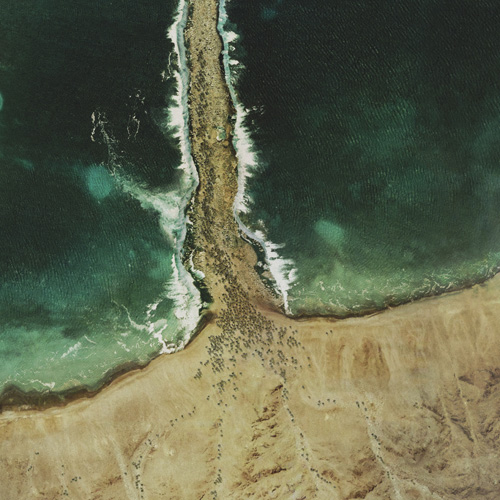 The Parting of the Red Sea
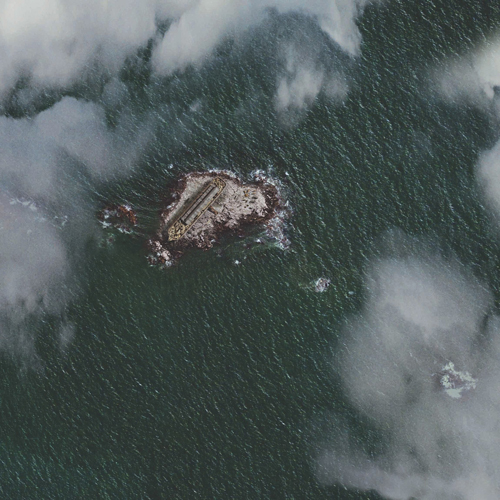 Noah's Ark
 The Garden of Eden
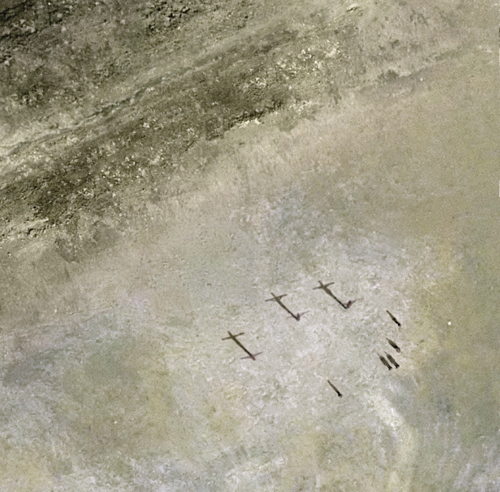 The Crucifixion
Wednesday, 2 December 2009
Eavan Boland - That the the Science of Cartography is Limited...
This was something I originally posted on my (crap) blog Strange Weather:
I thought that this would be a nice starting point to open up a discussion on representing landscapes. This poem in particular strikes me as a good entry point in which to tackle ideas of multiple, overlapping interpritations of the same space. A video version of Boland reading the poem is availiable here.
That the the Science of Cartography is Limited...
"I was certainly aware, long before I wrote this poem, that the act of mapmaking is an act of power and that I--as a poet, as a woman and as a witness to the strange Irish silences which met that mixture of identities--was more and more inclined to contest those acts of power. The official version-and a map is rarely anything else--might not be suspect as it discovered territories and marked out destinations. But the fact that these roads, so powerful in their meaning and so powerless at their origin, never showed up on any map of Ireland seemed to me then, as it does now, both emblematic and ironic."
Boland acts to reinscribe the map, taking action and drawing attention to a history of forgotton individuals - something painfully symbolised in the unfinished paths. By uncovering the lost famine roads, Boland gives voice to the silenced, it is a brave reclaiming of history, and contributes to an ongoing post-colonial practice of re-examining historical validity. This can be seen a lot in Boland's poetry - particularly in the collection from which this poem comes: In a Time of Violence (1995). Readers may also want to look at The Dolls Museum in Dublin and In a Bad Light from the same collection.
I thought that this would be a nice starting point to open up a discussion on representing landscapes. This poem in particular strikes me as a good entry point in which to tackle ideas of multiple, overlapping interpritations of the same space. A video version of Boland reading the poem is availiable here.
That the the Science of Cartography is Limited...
   -and not simply by the fact that this shading of
forest cannot show the fragrance of balsam,
the gloom of cypresses
is what I wish to prove.

When you and I were first in love we drove
to the borders of Connacht
and entered a wood there.

Look down you said: this was once a famine road.

I looked down at ivy and the scutch grass
rough-cast stone had
disappeared into as you told me
in the second winter of their ordeal, in

1847, when the crop had failed twice,
Relief Committees gave
the starving Irish such roads to build.

Where they died, there the road ended

and ends still and when I take down
the map of this island, it is never so
I can say here is
the masterful, the apt rendering of

the spherical as flat, nor
an ingenious design which persuades a curve
into a plane,
but to tell myself again that
the line which says woodland and cries hunger
and gives out among sweet pine and cypress,
and finds no horizon

will not be there.
"I was certainly aware, long before I wrote this poem, that the act of mapmaking is an act of power and that I--as a poet, as a woman and as a witness to the strange Irish silences which met that mixture of identities--was more and more inclined to contest those acts of power. The official version-and a map is rarely anything else--might not be suspect as it discovered territories and marked out destinations. But the fact that these roads, so powerful in their meaning and so powerless at their origin, never showed up on any map of Ireland seemed to me then, as it does now, both emblematic and ironic."
Boland acts to reinscribe the map, taking action and drawing attention to a history of forgotton individuals - something painfully symbolised in the unfinished paths. By uncovering the lost famine roads, Boland gives voice to the silenced, it is a brave reclaiming of history, and contributes to an ongoing post-colonial practice of re-examining historical validity. This can be seen a lot in Boland's poetry - particularly in the collection from which this poem comes: In a Time of Violence (1995). Readers may also want to look at The Dolls Museum in Dublin and In a Bad Light from the same collection.
Subscribe to:
Posts (Atom)